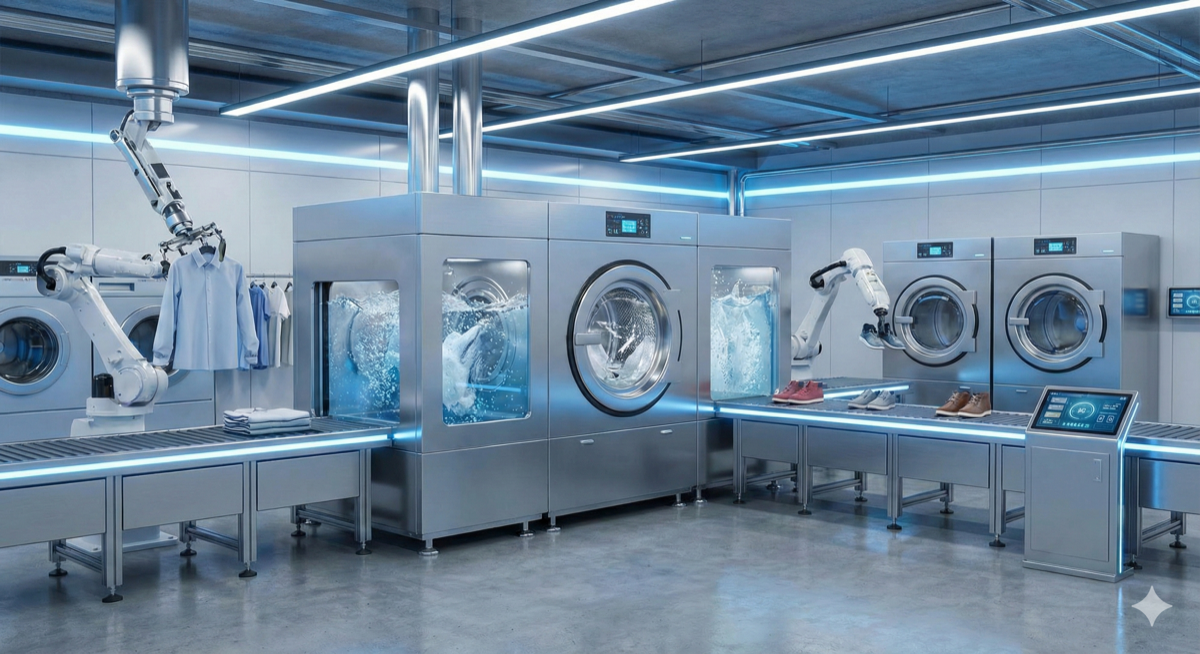
In our highly technological world today, where automated systems handle numerous tasks, it may seem surprising that there are no widespread automated industrial shoe cleaning systems yet. While we have automatic car washes and robot-controlled production lines, shoe cleaning presents a unique challenge. In this article, we will explore the reasons why automated industrial shoe cleaning systems have not existed until now.
Diversity of Shoe Types and Materials
One of the main reasons for the absence of automated industrial shoe cleaning systems lies in the enormous diversity of shoe types and materials. Shoes are made from different materials such as leather, fabric, plastic, and rubber. Each material requires a specific cleaning method to avoid damage. Furthermore, shoe shapes, sizes, and surfaces vary greatly. Developing a single system that meets all these requirements is extremely challenging.
Complexity of Contamination
Shoes are exposed to various types of dirt daily, such as mud, oil, paint, or grass stains. Each type of contamination requires a specific cleaning technique and chemical to effectively remove it. Recognizing and specifically cleaning each type of contamination requires advanced sensors and algorithms that have not been sufficiently developed until now.
Sensitivity and Fragility of Shoes
Another obstacle to automated industrial shoe cleaning systems is the sensitivity and fragility of shoes. Many shoes contain delicate materials such as fabrics, decorations, or electronic components. Improper cleaning could damage or destroy these materials. Developing a system that can safely and effectively clean delicate shoes requires extensive research and development.
Adaptation to Individual Customer Preferences
Shoes are a personal item, and many people have specific preferences and requirements regarding the cleaning of their shoes. An automated industrial shoe cleaning system would need to be able to consider individual settings and preferences to meet customer needs. This requires a high degree of flexibility and adaptability that has not been sufficiently available until now.
Conclusion
Although automation is advancing in many areas, there have been no widespread automated industrial shoe cleaning systems until now. The diversity of shoe types and materials, the complexity of contamination, the sensitivity and fragility of shoes, and the adaptation to individual customer preferences are some of the challenges that must be overcome.
Cleanz Technologies is changing this situation:
Through the world's first professional shoe cleaning infrastructure.